
Ouzoud Village: Local Life, Access and Visiting Tips

Ouzoud village, officially douar Tanaghmeilt, is the Berber hamlet built on the plateau overlooking the 110-metre falls, in the commune of Aït Taguella (Azilal province). It's the starting point for all the trails, the place where boat rides are arranged, and where the restaurant terraces facing the main waterfall are located.
1. What exactly is Ouzoud village?
Contrary to what many travelers imagine before arriving, there isn't a single, centralized "Ouzoud village" like a medina square. It's more of a scattering of pisé houses and small stalls spread along the rocky plateau overlooking the canyon of the El Abid River. The population, mostly Amazigh-speaking Berbers, has historically lived off terraced farming (olive and fig trees), goat herding and, for the past thirty years or so, tourism linked to the Ouzoud Waterfalls.
The name "Ouzoud" is said to come from Berber and evoke the action of crushing olives — a direct nod to the many traditional oil mills that historically lined the river. Several of these water mills (locally called "rha") still run on the current's power today, and their mechanism can be seen in operation along the descending trail.
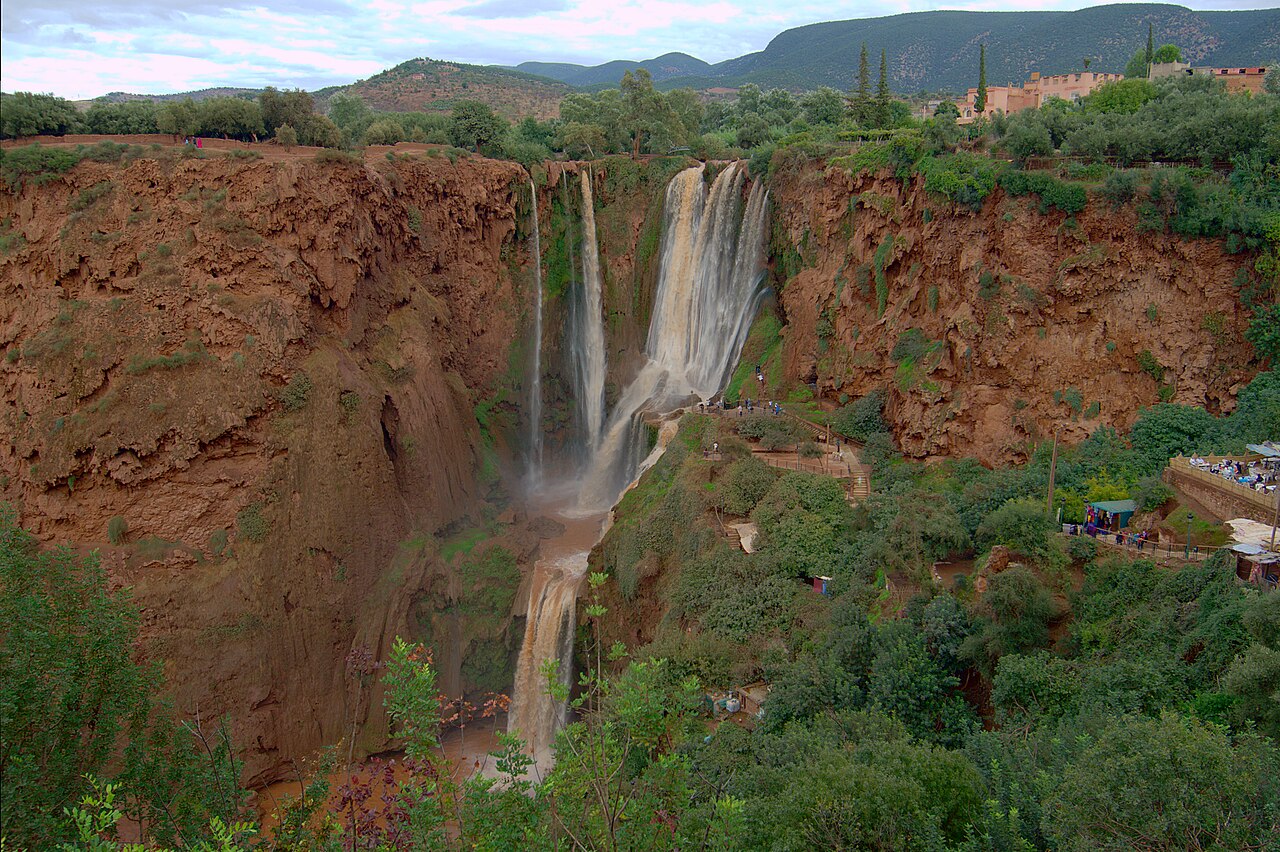
The village runs on the rhythm of tourist flows: at the crack of dawn, shopkeepers set up their stalls of pottery, rugs and saffron before the first minibuses arrive from Marrakech. In the late afternoon, calm returns and families go back to their usual farming activities.
2. What will you actually find in the village?
Here's a concrete overview of what makes up Ouzoud's village fabric, item by item:
| Village element | Practical description |
|---|---|
| Traditional water mills | About a dozen mills still visible along the trail, some still powered by the river's flow |
| Craft stalls | Pottery, hand-woven Berber rugs, argan oil, mountain honey, spices |
| Terraces & eateries | Family-run terrace restaurants facing the falls, tagines at €15/pers through our packages |
| Boat dock | Departure point for small wooden boats heading to the foot of the waterfall (€5/pers optional) |
| Barbary macaque colony | Semi-wild group observable on the left bank, on the edge of the village |
| Traditional housing | Pisé houses with flat roofs, typical of Middle Atlas Berber architecture |
3. Daily life and the local economy
Farming, the historic activity
Before tourism took off, the residents of douar Tanaghmeilt lived almost exclusively off terraced farming. The century-old olive trees bordering the canyon, the fig trees and the vegetable gardens irrigated by séguias (traditional channels) remain today a supplementary source of income for many families, even those now employed in restaurants or tourist crafts.
The tourism turning point
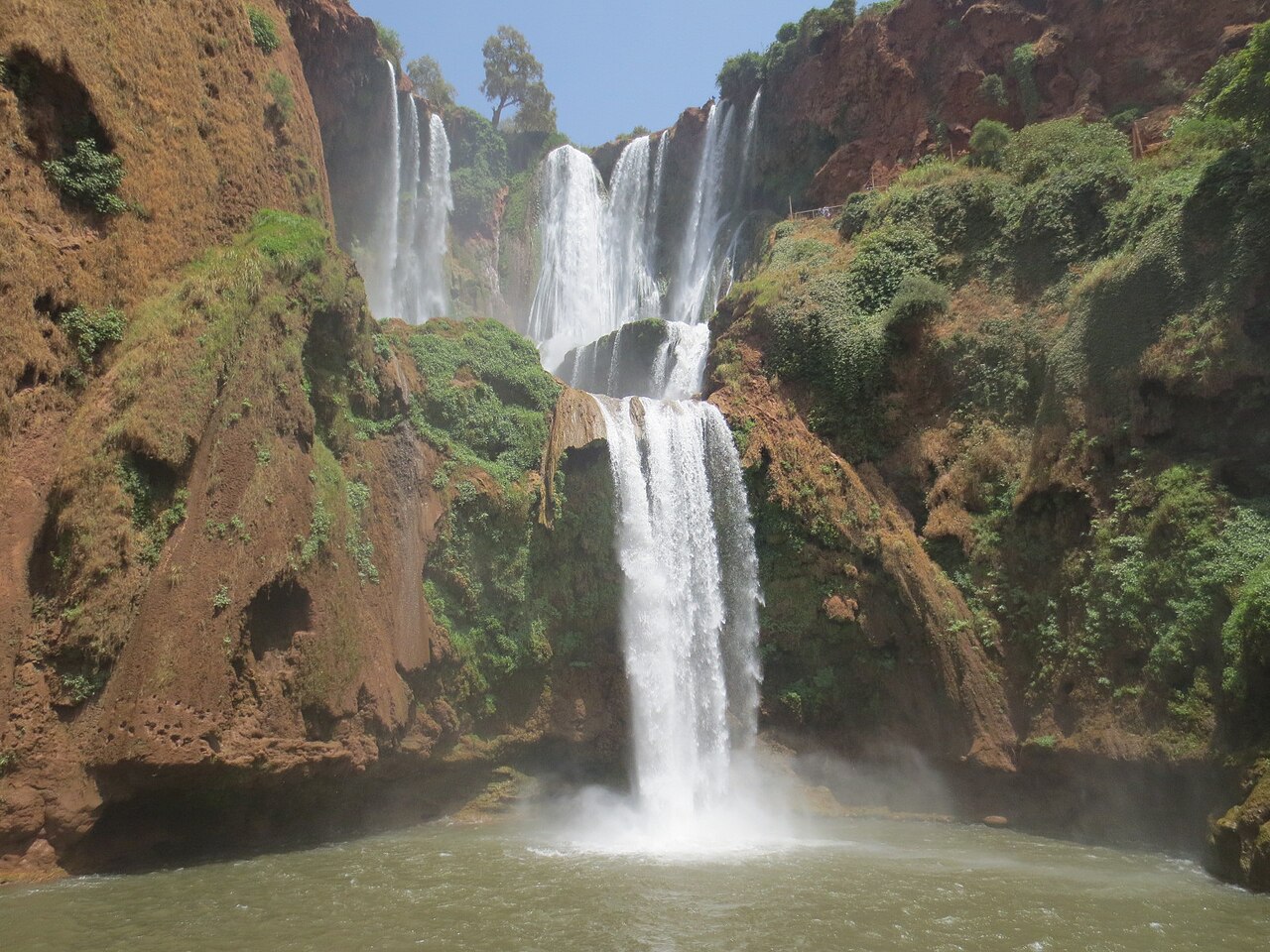
Since the 1990s, the growing fame of the waterfalls — the tallest in Morocco at 110 metres — has transformed the local economy. A good share of the village's families now draw their income from visitor-related activities: boat rentals, souvenir sales, restaurants, guiding. It's a fragile but living ecosystem, one that Itinerance Plus strives to support by working directly with local restaurateurs and boatmen rather than with structures from outside the region.
4. What does a typical itinerary from Marrakech look like?
The vast majority of visitors discover the village as part of a day excursion to the Ouzoud Waterfalls from Marrakech. The drive covers about 150 km and 2h30 to 2h45 on the road through the Tadla plain, with a coffee stop halfway. Here are the usual highlights:
Departure from Marrakech
Riad pickup in an air-conditioned minibus or minivan with an Itinerance Plus driver. See the details of the Marrakech-Ouzoud route.
Arrival at the village and descent toward the mills
Crossing the village, visiting the traditional water mills, then descending along the shaded trail. Details in our guide to hiking at Ouzoud.
Boat ride and macaque watching
A ride on a traditional boat to the foot of the falls, then a climb back along the bank where the Barbary macaque colony lives.
Lunch on a terrace in the village
A Berber tagine cooked over wood fire on a shaded terrace. See our recommended spots in restaurants at Ouzoud.
5. Price list and practical tips
| Option | Rate |
|---|---|
| Shared group excursion | €20 / person |
| Private minibus (1-7 pers) | €180 total |
| Private minibus (8-17 pers) | €230 total |
| Local guide, optional | +€5 / person |
| Boat ride | +€5 / person |
| Berber lunch | +€15 / person |
The village has no ATM: bring cash in dirhams for craft purchases, lunch and the boatman's tip. See our Ouzoud budget guide for a full estimate of your day, as well as hotels at Ouzoud if you're considering staying overnight rather than doing a day excursion.
6. What's beyond the village, in the valley and the M'Goun Geopark?
Douar Tanaghmeilt is just one entry point into a much larger territory: the entire province of Azilal is classified as the M'Goun UNESCO Global Geopark, a designation that recognizes the exceptional geological richness of the central High Atlas — gorges carved into limestone, dinosaur footprints, petrifying springs. Travelers with more than a single day often continue on to the Aït Bouguemez valley, nicknamed the "happy valley," about two hours further south by unpaved road.
At the scale of the village itself, keep in mind that infrastructure remains deliberately simple: no large commercial zone, no international-standard hotels, but a preserved rural authenticity. It's precisely this contrast — a spectacular natural site connected to a Berber village life that has changed little — that sets Ouzoud apart from other, more artificial tourist attractions in Morocco. For families considering the visit, our page on Ouzoud with family details the precautions to take on the village trails and near the canyon.
How to visit without reducing the village to a backdrop?
The village around the Ouzoud Waterfalls is a place where people live, not just the entrance to an attraction. Stay on public paths, ask before photographing someone, don't feed the macaques, and check the origin of products presented as local. An attentive hour brings more than a timed succession of purchases and activities.
Frequently Asked Questions
Tout ce qu'il faut savoir avant de réserver votre excursion aux cascades d'Ouzoud.
More Guides About Ouzoud village
To compare this guide with the transport program from Marrakech, check out the page dedicated to the Ouzoud village.