
Ouzoud Weather: Month-by-Month Temperatures and Season

For the exact temperature today and hour-by-hour forecasts, check a real-time weather service such as AccuWeather or MeteoCity — that data changes daily and we don't republish it here. What you'll find below instead is what no weather bulletin tells you: which season to pick based on waterfall flow, swimming conditions and crowd levels, and how to actually adapt your visit to the weather on the day.
Ouzoud weather follows a semi-continental mountain climate (1,060 metres altitude), with hot, dry summers (28-38°C in July-August) and cool, sometimes rainy winters (8-18°C from November to February). Spring (March-May) offers the most balanced conditions, between 15°C and 27°C, with the strongest water flow thanks to snowmelt from the High Atlas.
Why these figures are enough to plan a visit:
- Gap with Marrakech: Ouzoud is generally 3 to 6°C cooler thanks to its 1,060-metre altitude.
- Concentrated rainfall: most precipitation falls between November and March, with 6 to 10 rainy days per month during that period.
- Year-round flow: the falls flow continuously, peaking in spring and gradually decreasing in summer.
- Best light for rainbows: spring combines strong flow with the most photogenic mist.
Ideal for: travelers who want to pick a season based on the heat they're after, the waterfall flow, or hiking comfort.
Key takeaway: recent rain makes the steps slippery near the waterfall, regardless of the month's climate average.
Ouzoud weather: what climate should you expect?
Ouzoud has a semi-continental mountain climate, with hot, dry summers (28 to 38°C in July-August) and cool, sometimes rainy winters (8 to 18°C between November and February). Sitting at 1,060 metres altitude, the site is generally 3 to 6°C cooler than Marrakech, a welcome advantage during the hot season.
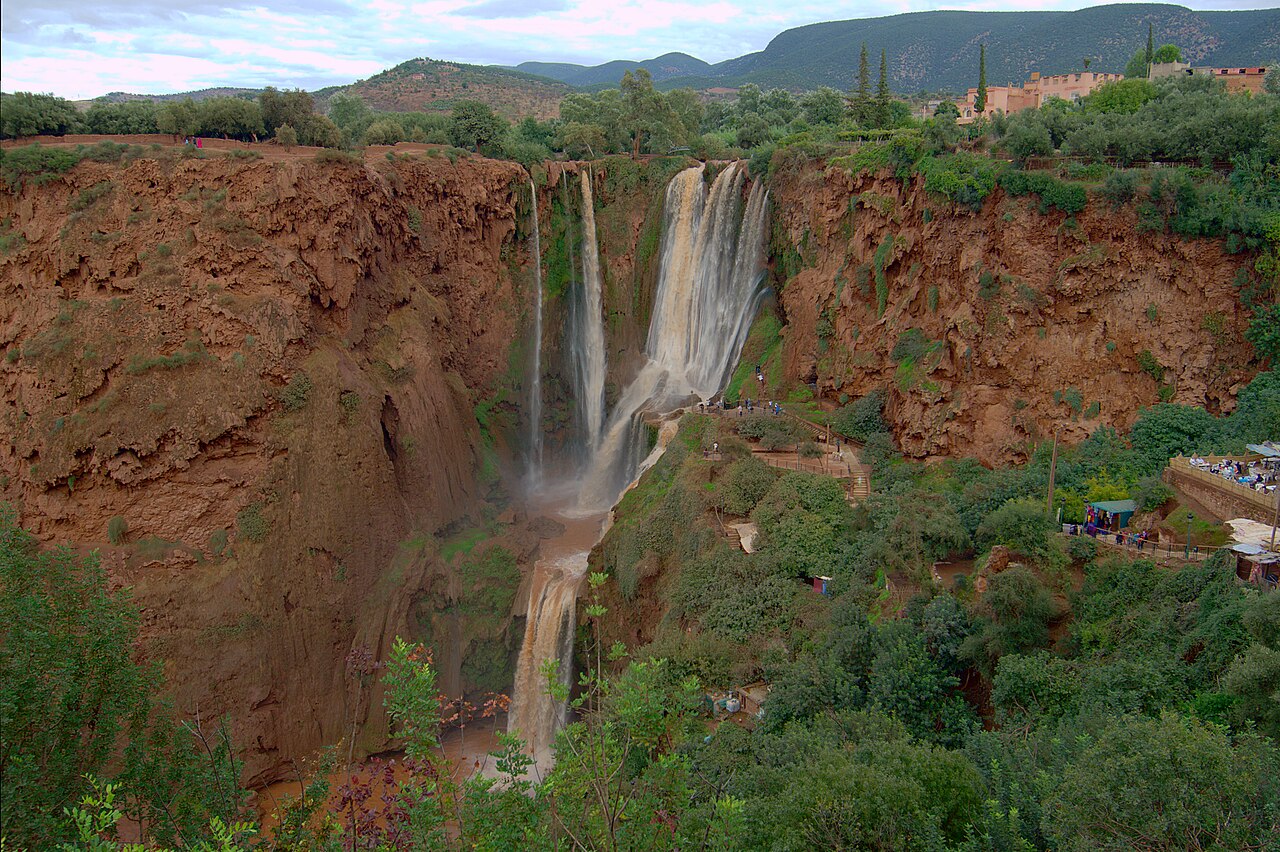
The Ouzoud Waterfalls flow year-round, fed by permanent springs from the High Atlas and by the El Abid River. The flow varies significantly by season: it peaks in spring thanks to snowmelt, then gradually decreases in summer without ever stopping.
What are the temperatures at Ouzoud month by month?
Here are the average climate figures for the Ouzoud waterfalls region, in Azilal Province, cross-referenced from historical climate records available for the Béni Mellal-Khénifra region from the Moroccan General Directorate of Meteorology:
| Month | Min/max temperature | Rainfall | Sunshine |
|---|---|---|---|
| January | 5°C / 15°C | Moderate | Good |
| February | 6°C / 17°C | Moderate | Good |
| March | 8°C / 20°C | Moderate | Very good |
| April | 10°C / 23°C | Light to moderate | Excellent |
| May | 13°C / 27°C | Light | Excellent |
| June | 17°C / 32°C | Very light | Excellent |
| July | 20°C / 37°C | Near zero | Maximum |
| August | 20°C / 38°C | Near zero | Maximum |
| September | 17°C / 32°C | Light | Very good |
| October | 13°C / 27°C | Moderate | Good |
| November | 9°C / 20°C | High | Moderate |
| December | 6°C / 16°C | High | Moderate |
Why is Ouzoud often cooler than Marrakech?
The waterfall site sits at about 1,060 metres altitude in the foothills of the Middle Atlas, on the edge of the High Atlas and the M'Goun UNESCO World Geopark. This elevation explains the notable temperature gap with Marrakech, which sits at just 466 metres. In practice, it's not uncommon to leave a sweltering 40°C Marrakech for a relatively cool 32°C at the foot of the falls, with the extra cooling effect of the mist generated by the main waterfall.
When is rain most likely?
Rain is more likely during the cool season and contributes to the flow of the El Abid River, without on its own predicting what the falls will look like months later. For a hike, pay attention mainly to recent rainfall: steps and rocks can become slippery, even with good shoes.
Do mist and wind change the visit?
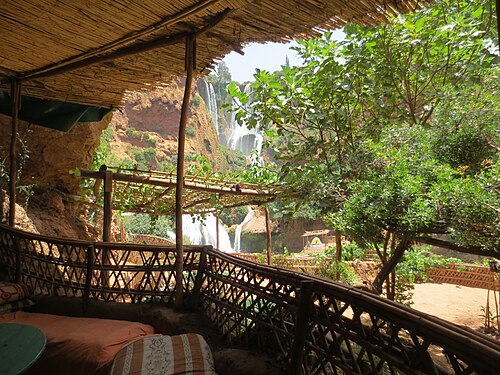
The power of the 110-metre main waterfall generates a distinctive local microclimate: a constant mist rises from the receiving pool, cooling the surrounding air over several dozen metres. This effect is particularly noticeable in spring and early summer, when the flow is still strong, and gives rise to the rainbows visible around midday when the sun is high in the sky.
What should you wear depending on the season?
- Summer (June-August): light clothing, a hat, high-protection sunscreen, swimwear, walking sandals, and a light layer for the evening return.
- Spring/Autumn (March-May, Sept-Oct): layered clothing, a light jacket, closed hiking shoes.
- Winter (Nov-Feb): waterproof jacket, warm sweater, non-slip shoes, and possibly a compact umbrella.
How does Ouzoud's climate compare to Marrakech and Azilal?
Azilal Province, where the falls are located, has a noticeably cooler and more humid climate than Marrakech, due to its position in the first foothills of the High Atlas. The table below illustrates this gap for the key months:
| City | Altitude | Average summer temperature | Average winter temperature |
|---|---|---|---|
| Marrakech | 466 m | 36-42°C | 10-19°C |
| Ouzoud | 1,060 m | 30-38°C | 6-16°C |
| Azilal (main town) | 1,250 m | 28-35°C | 4-14°C |
This altitude gradient explains why many visitors from Marrakech choose Ouzoud as an escape from summer heat, while in winter it's worth packing warmer clothing than you would for Marrakech itself.
Does the weather predict the flow of the falls?
Recent weather gives an indication, not a certainty. A wet spell can boost the flow, while a dry season can make the falls narrower. Water reserves, upstream rainfall, and the exact timing of your visit also play a role: a monthly average alone can't tell you exactly what the waterfall will look like.
How does the weather affect a day trip from Marrakech?
The 150-kilometre journey takes about 2.5 to 2h45. Strong heat mainly makes the walking part of the visit more demanding; rain calls for more caution on the road and on the steps. Check local forecasts, since Marrakech weather doesn't always accurately reflect conditions at Ouzoud.
To refine your choice of dates, see our full guide to the best time to visit Ouzoud, which details the experience by season, or our dedicated page on the budget for a day at Ouzoud to plan your spending. For the full price breakdown by package, see also our Ouzoud excursion price page.
Which month offers the best balance of flow, weather and crowds?
Spring (March to May) brings the three most favorable factors together: the falls' flow is close to its peak thanks to upstream snowmelt, temperatures stay pleasant for hiking without summer's overwhelming heat, and crowds, while present, stay below the July-August peak. It isn't the only good window — autumn offers a fairly close balance with a somewhat more modest flow — but spring combines the most advantages at once.
What should you do at Ouzoud if it rains?
A visit stays possible in moderate rain, with a few adjustments. The stone steps on the main trail get slippery: slow down, especially on the descent, and avoid smooth-soled shoes. The waterfall's mist mixes with the rain, cutting visibility for photos but not the site's appeal. In heavy rain or a storm, it's better to skip the full descent and stick to the viewpoints near the car park, reachable without the more exposed sections. An organized excursion generally isn't cancelled for moderate rain; if in doubt, check with your transport operator before departure.
Can you visit Ouzoud during Ramadan?
Yes, the site stays open and accessible during Ramadan, with no change to trail hours. The difference shows mainly in services: some restaurants and cafés in the village may run on reduced daytime hours and pick back up fully after the fast breaks (iftar) in the late afternoon. Confirm lunch availability before you go, and out of respect for locals observing the fast, avoid eating or drinking visibly in public during the day, including on the trails.
Should you pack an umbrella or a fleece jacket for the excursion?
Many international travelers wonder whether they need an umbrella or a fleece jacket for a day excursion. In practice, outside the rainy season (November-March), a simple light windbreaker is more than enough, since most activities take place outdoors in the sun. During the rainy season, it's best to check the forecast the evening before departure and pack accordingly, though showers generally stay brief and don't prevent the visit.
What is the best time of day depending on the season?
Beyond the month you choose, the time of day you visit also affects thermal comfort. In summer, an early departure from Marrakech lets you arrive at Ouzoud before the afternoon's peak heat and enjoy swimming in the pool below the falls while the water is still cool. In winter, the 11am-3pm window offers the best light for photography and avoids the morning mist that sometimes settles in the valley until around 9:30am.
What should you finally check before leaving?
Read the short-term local forecast rather than a regional average. Look at the maximum temperature, the chance of rain and the wind, then adjust mainly your shoes, your water supply and the time you start heading back.
In spring, conditions are often pleasant for walking. In summer, an early start and sun protection become priorities. After rain, slow down on the steps: near the falls, moisture sometimes lingers even once the sky has cleared.
Once you've chosen the ideal date based on the weather, book your excursion to the Ouzoud waterfalls from Marrakech directly to enjoy the best conditions.
Frequently Asked Questions
Tout ce qu'il faut savoir avant de réserver votre excursion aux cascades d'Ouzoud.
More Guides About Ouzoud weather
To compare this guide with the transport program from Marrakech, check out the page dedicated to the Ouzoud weather.